
Designing a kitchen usually involves making dozens of small decisions. Worktop materials, cabinet finishes, flooring, lighting. Somewhere in the middle of all that planning sits the splashback.
It might seem like a minor detail at first, but the splashback can have a surprisingly big impact on the overall look of the kitchen. In recent years, coloured glass splashbacks have become a favourite choice for homeowners who want something clean, modern and easy to maintain.
But choosing the right colour isn’t always straightforward. With so many options available, it’s worth taking a bit of time to think about how the splashback will fit into the rest of the space.
Here are a few things worth considering before making a final decision.
Start With Your Kitchen’s Overall Colour Scheme
A good starting point is simply looking at the colours that are already present in the kitchen. Cabinets, worktops, flooring and even wall paint all influence how a splashback colour will feel once it’s installed.
In many kitchens, the splashback sits between two large visual areas. The cabinets above and the worktops below. Because of this, it often acts as a bridge between the two.
For example, if your kitchen has white or light grey cabinets, a coloured glass splashback can add a subtle layer of colour without overwhelming the space. Soft greens, blues or warm neutral shades tend to work nicely in these situations.
If the kitchen already has strong colours, you might prefer a splashback that blends in more quietly. Sometimes a softer tone works better than something very bold.
Standing back and looking at the kitchen as a whole usually makes the decision clearer.
Consider Light and Space in the Kitchen
Lighting plays a bigger role than most people expect when choosing kitchen splashback colours.
A shade that looks bright and vibrant in a showroom might appear softer in a kitchen with limited natural light. On the other hand, a darker tone can sometimes look richer and more balanced when the room receives plenty of daylight.
One advantage of glass kitchen splashbacks is that they reflect light slightly. Even darker colours tend to catch and bounce light around the room.
In smaller kitchens, lighter colours often feel more comfortable because they help the space appear open and airy. In larger kitchens, deeper colours like navy or forest green can create a strong focal point without making the room feel heavy.
There isn’t a strict rule here, but thinking about light early on can help narrow the options.
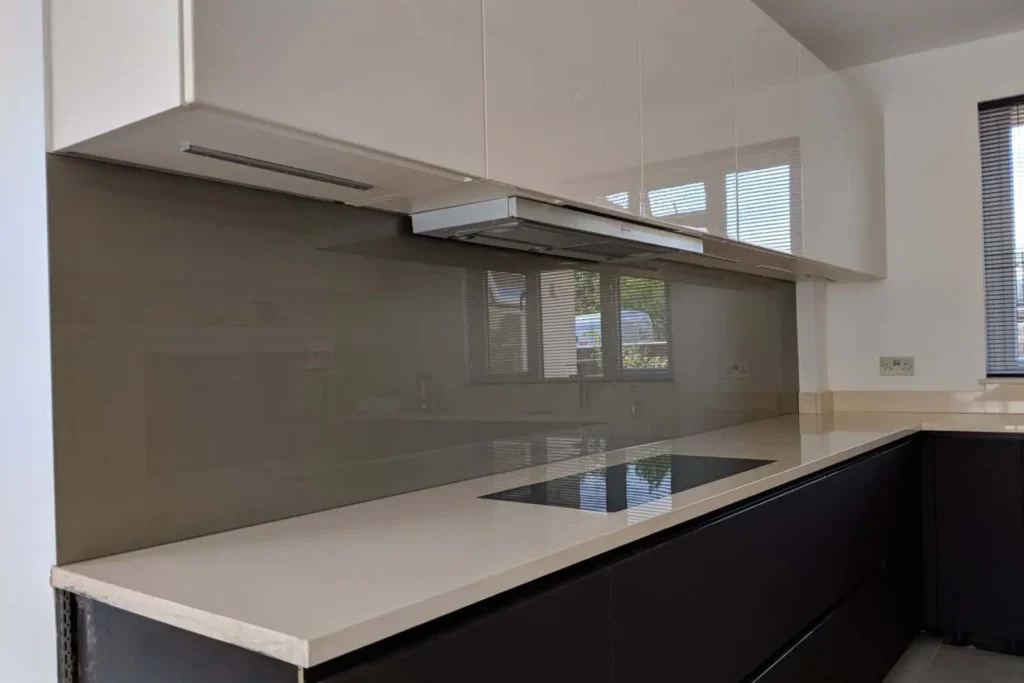
Match or Contrast With Your Worktops
Worktops usually take up a large visual area in the kitchen, so they naturally influence the splashback choice.
If your worktop has a detailed pattern, such as marble style veining or a bold stone effect, many homeowners prefer a simple coloured glass splashback. This prevents the space from looking too busy.
On the other hand, if the worktop is quite minimal, the splashback can introduce a bit more personality. A soft coloured panel can add warmth or contrast without dominating the room.
Sometimes the best results come from a gentle contrast rather than trying to match colours perfectly.
Think About the Mood You Want to Create
Colour affects how a kitchen feels, even if the effect is subtle.
Soft greys, pale blues and warm neutrals often create a calm and relaxed atmosphere. These colours tend to age well because they work with a wide range of kitchen styles.
Blues and greens are also popular in modern kitchens because they feel fresh and natural. They add colour without being too overpowering.
Stronger colours, like deep red or bright yellow, can work beautifully in the right setting. But they usually need to be balanced carefully with the rest of the kitchen.
If you’re unsure, choosing a slightly softer version of a colour you like is often the safer option.
Choose Toughened Glass for Durability
While colour is important, the material itself matters just as much.
Most coloured glass splashbacks are made from toughened glass, which is specially treated to withstand heat and everyday kitchen use. This makes them suitable for installation behind hobs and cooking areas.
The colour is applied to the back of the glass rather than the surface. That means it’s protected from scratches and everyday wear.
Because of this construction, toughened glass splashbacks tend to keep their appearance for many years with very little maintenance.
Consider Custom Sizing and Finishing
Another advantage of glass splashbacks is that they can be made to fit your kitchen layout quite precisely.
Panels can be cut around electrical sockets, switches and extractor fans so that everything sits neatly in place. This helps create a clean, seamless finish across the wall.
Some homeowners also choose to extend the splashback across a larger section of the wall rather than just behind the hob. This can give the kitchen a more modern and continuous look.
Small details like these often make the finished kitchen feel more thoughtfully designed.
Take Time to Test the Colour
Before committing to a colour, it’s always worth seeing a sample in your own kitchen.
Lighting conditions at home can be very different from those in a showroom or online images. A colour that looked perfect on a screen might appear quite different once placed next to your cabinets and worktops.
Holding a sample panel against the wall and observing it at different times of the day can help you feel more confident about the choice. It’s a small step, but one that can make a big difference.
A coloured glass splashback can completely change the character of a kitchen. It protects the wall from everyday cooking splashes while also adding colour and visual interest. By thinking about your kitchen’s existing colours, lighting and materials, it becomes much easier to choose a shade that feels natural within the space.
When the colour is right, the splashback doesn’t just serve a practical purpose. It quietly ties the whole kitchen together.
Choosing colours online can be tricky. Order free samples from Simply Splashbacks and see how the finish looks in your kitchen before making a decision.