
Choosing a splashback might seem like a small part of designing a kitchen, but once it’s in place, it becomes one of the most noticeable features in the room. It sits right at eye level, catches the light and ties together your worktops and cabinets.
The challenge is that there’s no single “best” option. What works in one kitchen might not feel right in another.
Three of the most popular kitchen splashback choices are glass, porcelain and mirrored. Each has its own look, feel and practical benefits. If you’re trying to decide between them, it helps to look beyond appearance and think about how each material fits into your everyday kitchen use.
Let’s break it down in a way that makes the decision a little easier.
Glass Splashbacks: Clean, Versatile and Easy to Live With
Glass splashbacks are often the first option people consider, especially in modern kitchens. They have a smooth, glossy finish that instantly gives the space a clean and contemporary feel.
One of the biggest advantages is how flexible they are in terms of design. Glass can be colour matched to almost any shade, which makes it easy to coordinate with cabinets or worktops. Whether you want something neutral or a bold feature colour, glass usually offers that freedom.
From a practical point of view, glass is also easy to maintain. There are no grout lines, so cleaning tends to be quick and straightforward. Most marks can be wiped away in seconds. These splashbacks are typically made from toughened glass, which means they can handle heat from the hob and everyday kitchen use without any issues.
If you’re looking for something simple, modern and low maintenance, glass splashbacks are often a safe and reliable choice.
Porcelain Splashbacks: Durable and Design Led
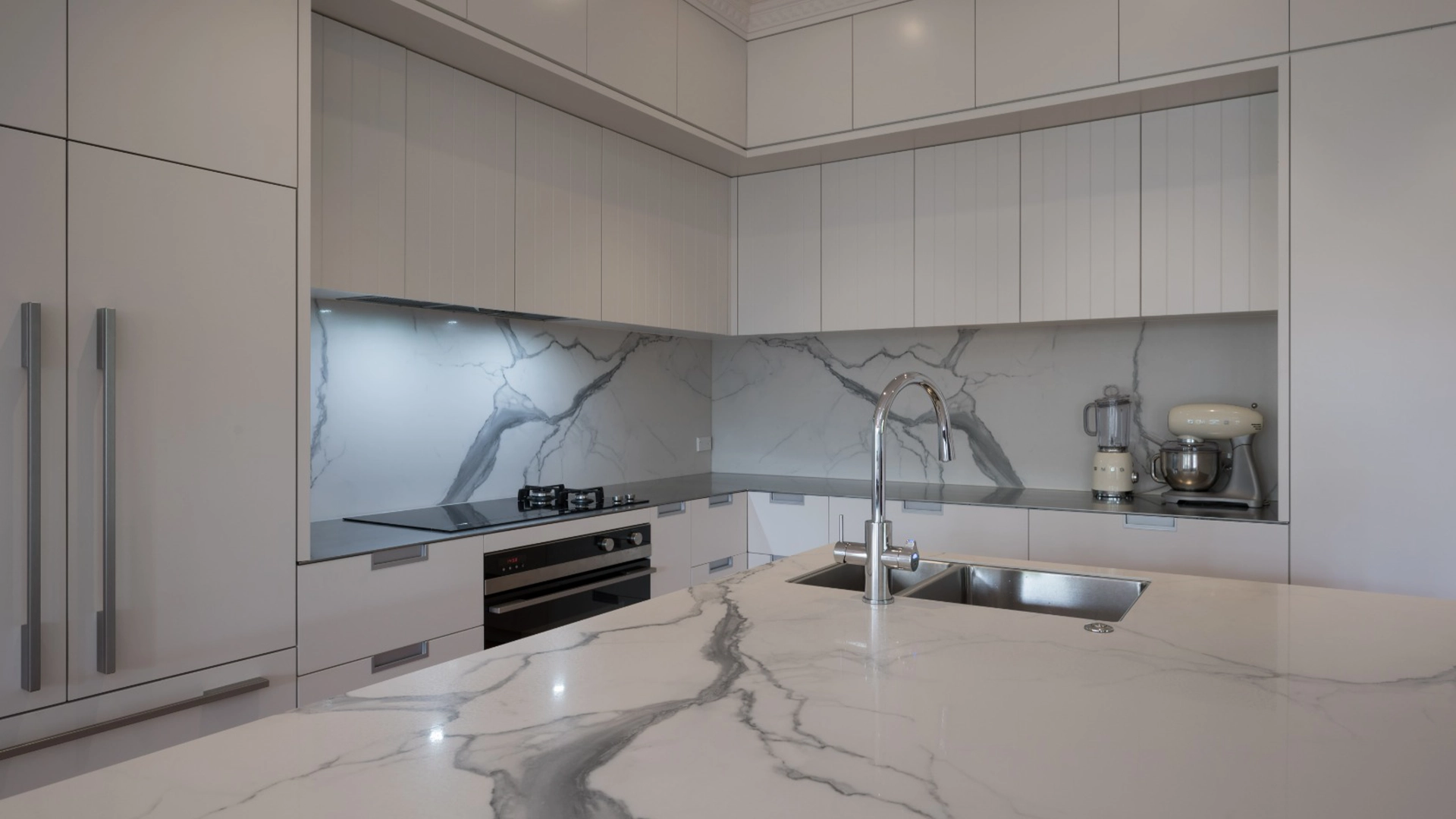
Porcelain splashbacks have become more popular in recent years, particularly in kitchens that lean toward a more premium or natural look. What makes porcelain stand out is its durability. It’s highly resistant to heat, scratches and stains, which makes it well suited to busy kitchens where surfaces see a lot of use.
In terms of design, porcelain offers something slightly different from glass. Instead of flat colours, it often comes in textured or patterned finishes. Marble effect, stone inspired surfaces and subtle veining are all common options. This makes porcelain a good choice if you want your splashback to feel like an extension of your worktop rather than a separate feature.
It’s worth noting that porcelain can be a bit more understated in terms of colour flexibility compared to glass. But for many homeowners, the natural look more than makes up for that.
Mirrored Splashbacks: Light Enhancing and Space Boosting
Mirrored splashbacks bring a completely different feel to the kitchen.
Their main advantage is how they reflect light. In smaller kitchens or spaces with limited natural light, this can make a noticeable difference. The reflection helps the room feel brighter and slightly more open. They also add a sense of depth. Instead of looking at a flat wall, you see reflections of the surrounding space, which softens the boundaries of the kitchen.
Most mirrored splashbacks are made from toughened glass as well, so they’re safe to use behind hobs and cooking areas. There are different styles to choose from too. Standard mirror finishes offer a clear reflection, while antique or tinted mirrors provide a softer, more decorative look.
Mirrored splashbacks tend to work particularly well in modern or smaller kitchens where light and space are key considerations.
How to Decide Between Glass, Porcelain and Mirrored Splashbacks
When choosing between these materials, it often comes down to how you want your kitchen to feel.
- If you prefer a clean, simple and highly customisable look, glass splashbacks are usually the easiest option. They suit a wide range of kitchen styles and are very practical for everyday use.
- If durability and a more natural, textured finish are important, porcelain might be the better fit. It works especially well in kitchens where you want the splashback to blend with stone or marble style worktops.
- If your kitchen feels small or lacks natural light, mirrored splashbacks can help open up the space. They add brightness and a slightly more dynamic visual effect.
In many cases, the decision isn’t about which material is better overall. It’s about which one suits your kitchen layout, lighting and design preferences.
Glass vs Porcelain vs Mirrored Splashbacks: Quick Comparison
| Feature | Glass Splashbacks | Porcelain Splashbacks | Mirrored Splashbacks |
| Appearance | Smooth, glossy, modern | Natural, stone or marble effect | Reflective, adds depth |
| Colour Options | Very wide range | Limited to natural finishes | Mirror, antique, tinted |
| Light Reflection | Moderate | Low | High |
| Heat Resistance | High (toughened glass) | Very high | High (toughened glass) |
| Maintenance | Very easy to clean | Easy to clean | Easy but needs regular wiping |
| Durability | Strong and long lasting | Extremely durable | Durable but surface needs care |
| Best For | Modern, clean kitchens | Premium, natural look kitchens | Small or darker kitchens |
Your splashback might not be the largest element in the kitchen, but it plays a big role in how the space looks and functions.
Glass, porcelain and mirrored splashbacks all bring their own advantages. Whether you’re aiming for a clean modern finish, a natural stone inspired look or a brighter and more open feel, there’s an option that will fit your kitchen. Taking a bit of time to consider how each material works in your space can help you choose something that not only looks right but also works well day to day.
Explore the Simply Splashbacks range or speak to our team for guidance. Get a free quote today and find the perfect splashback to suit your space.