
When you plan a kitchen, the splashback rarely gets the same attention as the cabinets or worktops. It sits quietly behind the hob and the sink, yet it takes more daily heat and mess than almost any other surface in the room.
Heat resistance is one of the most practical things to weigh up before you choose. A panel that looks lovely but cannot cope with the warmth coming off your hob will not last, and it may not be safe either.
So which heat resistant splashback material actually performs best where it matters most? The honest answer comes down to the material, how it is made and where you plan to fit it. Some options are built to shrug off high temperatures, while others are better kept well away from direct heat.
Let’s look at how the main kitchen splashback materials compare, starting with the spot that matters most: the wall directly behind your hob.
Why Heat Resistance Matters Behind a Hob
The space behind a hob is the hardest working part of any kitchen wall. Gas flames, hot pans and rising steam all reach it during normal cooking, and over time a material that is not designed for that environment can crack, warp or discolour.
Heat resistance is about more than durability. A splashback fitted behind a cooker needs to stay stable when temperatures climb, so the material you pick has a direct impact on safety as well as how the kitchen ages. The same material that works perfectly behind a sink might not be the right call behind a gas hob.
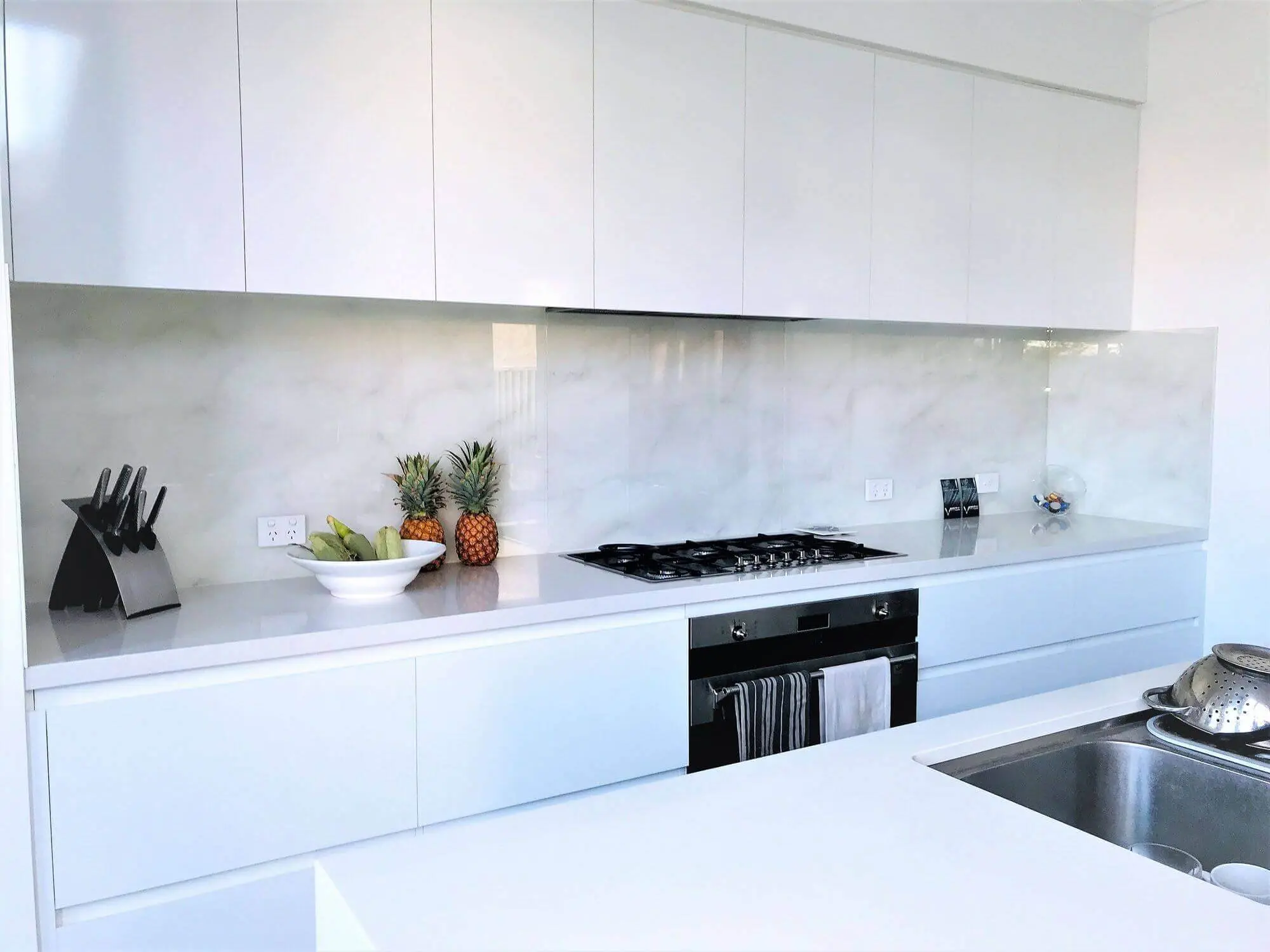
Glass Splashbacks: Toughened and Heat Safe
Glass splashbacks are one of the most popular choices for the wall behind a hob, and for good reason. They are made from toughened glass, which is heated and rapidly cooled during manufacture to make it far stronger and far more heat resistant than ordinary glass.
In practice, a toughened glass panel can handle the warmth from a standard gas or electric hob without any issue. The smooth surface also wipes clean in seconds, so the heat performance comes with very little upkeep.
The same toughening runs across the glass range, including the softer finishes. A signature satin glass splashback panel gives you a low sheen, refined look while keeping the heat resistance you get from toughened glass, so you never trade safety for style.
Porcelain Splashbacks: The Most Heat Resistant Splashback Material
If you want the single strongest performer on heat, porcelain splashbacks lead the way. Porcelain is fired at extremely high temperatures during production, which gives the finished panel an exceptional tolerance for heat once it is on your wall.
This high firing makes porcelain the most heat resistant splashback material for kitchens that see heavy cooking. It resists not only heat but also scratches and stains, which suits homes where the kitchen is always in use. Plenty of busy households pick it for that reason, and it sits among the strongest surfaces for hard working family kitchens.
Porcelain also leans into a more natural look, with marble and stone effect finishes that sit beautifully alongside stone worktops. You get serious performance and a premium feel in one panel.
Mirrored Splashbacks: Reflective and Still Heat Safe
Mirrored splashbacks are usually chosen for the way they bounce light around and make a room feel larger, but heat resistance is still part of the package. Most mirrored panels are made from toughened glass, so they are safe to fit behind hobs and cooking areas.
The reflective finish does need a little more regular wiping to stay clear, yet on heat alone a toughened mirrored panel holds up well. For smaller or darker kitchens, it offers real brightness without giving up the heat performance you would expect from glass.
Materials That Struggle With Heat
Not every splashback material copes well near a hob. Acrylic panels are light and affordable but have a low melting point, so they can warp or scorch if fitted too close to direct heat. Laminate sits in a similar position and is better suited to areas away from the cooker.
Standard untoughened glass is another one to avoid behind a hob, since it has not been treated to handle sudden temperature changes. The toughening process is what makes the difference, which is why the glass used for splashbacks is never ordinary glass.
Heat Resistance Compared at a Glance
| Material | Heat Resistance | Best Use |
| Glass (toughened) | High | Safe behind any standard hob |
| Porcelain | Very high | Heavy cooking and busy kitchens |
| Mirrored (toughened | High | Hobs in small or darker kitchens |
| Acrylic | Low | Areas away from direct heat |
| Laminate | Low to moderate | Sink areas rather than behind hobs |
So Which Splashback Material Wins on Heat?
On pure heat resistance, porcelain takes the top spot. Its high firing gives it the strongest tolerance of any common splashback material, which makes it ideal if your kitchen does a lot of high heat cooking.
Toughened glass is not far behind and is more than capable behind a normal hob, with the bonus of easy cleaning and a wide choice of colours. Mirrored glass shares that same toughened strength while adding light and depth to smaller rooms. If you are weighing up the look of each option as well as the performance, it helps to see how glass, porcelain and mirrored finishes stack up side by side before you commit. Anyone choosing between a seamless panel and a more traditional tiled finish will find heat is rarely the deciding factor, since both perform well there.
The right splashback is the one that matches how you cook and how your kitchen looks. For the highest heat resistance, porcelain is hard to beat. For a clean modern finish that still handles the hob with ease, toughened glass is a reliable and flexible choice.
Explore the Simply Splashbacks range to find a finish that suits your kitchen and your cooking. Get a free quote today and choose a splashback built to handle the heat.