
When a kitchen feels “right”, it’s usually not because of one standout feature. It’s the way everything works together. The cabinets, the worktops, the lighting, even the smaller details like handles and finishes.
Splashbacks play a bigger role in that than most people expect. They sit right in the middle of the kitchen, often at eye level, connecting the upper and lower parts of the space. When chosen well, they bring everything together. When they don’t quite fit, the whole kitchen can feel slightly disjointed.
If you’re aiming for a kitchen that feels balanced and cohesive, here are a few practical tips that can help you get there.
Think of the Splashback as a Connector
It helps to stop thinking of the kitchen splashback as a separate feature.
Instead, see it as the element that links your cabinets and worktops. It sits between them, so naturally it can either blend the two together or create a clear break.
For example, if your cabinets are light and your worktop is darker, the splashback can sit somewhere in the middle. A mid tone glass splashback can soften the contrast and make the transition feel more natural.
When used this way, the splashback quietly holds the whole design together.
Keep Your Colour Palette Consistent
One of the simplest ways to create a cohesive kitchen is to limit the number of colours you’re using. That doesn’t mean everything has to match exactly. But the colours should feel like they belong together.
If your kitchen already includes two or three main shades, try to choose a splashback that fits within that palette. This could mean matching undertones or picking up a subtle colour from the worktop. Coloured glass splashbacks are particularly useful here because they can be matched closely to existing tones.
Keeping the palette consistent makes the kitchen feel more considered without making it look too uniform.
Balance Simplicity and Detail
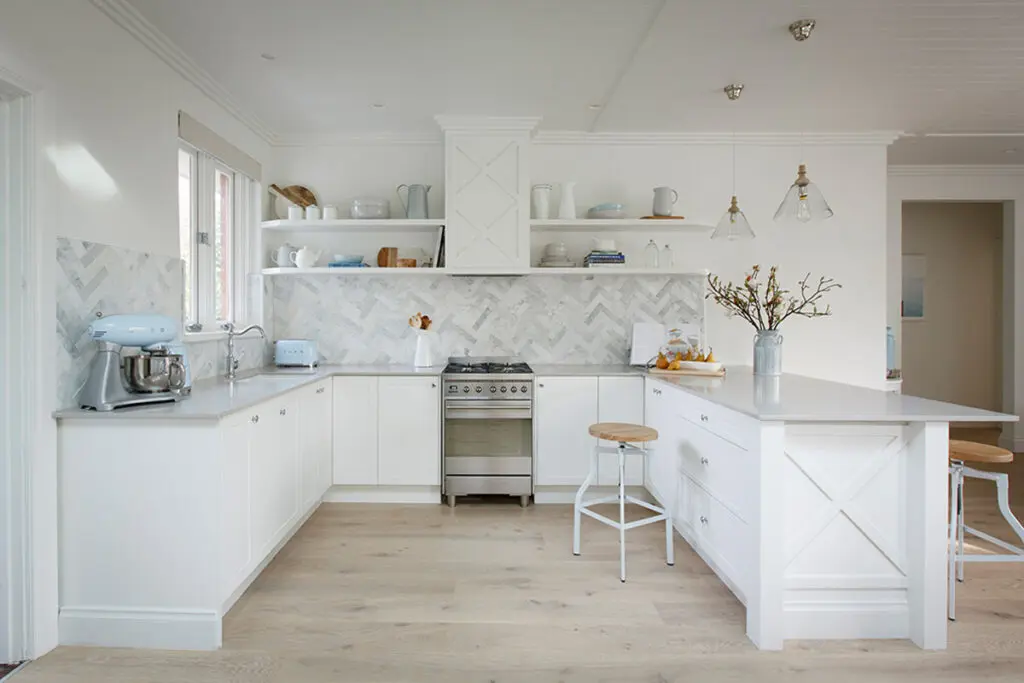
Every kitchen needs a balance between simple surfaces and more detailed elements.
If your worktop has a lot of pattern, like marble veining or a textured stone effect, it’s usually better to keep the splashback simple. A smooth glass splashback works well in these situations because it doesn’t compete for attention.
On the other hand, if your kitchen is quite minimal, the splashback can introduce a bit of interest. This might be through colour, a mirrored finish or a subtle texture.
The key is not to overload the space with too many focal points.
Consider Light and Reflection
Lighting changes how a kitchen feels more than most people realise. Splashbacks can help here, especially if you choose materials that reflect light. Glass splashbacks, for example, have a slight reflective quality that helps brighten the space. Mirrored splashbacks go a step further by reflecting both light and surrounding elements, which can make the kitchen feel more open.
If your kitchen doesn’t get much natural light, these options can make a noticeable difference without needing major changes.
Think About the Overall Style
Different kitchen styles call for slightly different splashback choices. In modern kitchens, clean lines and simple finishes tend to work best. This is where glass splashbacks are often used, as they create a smooth and seamless look. In more traditional kitchens, tiles or softer finishes might feel more in place.
The important thing is that the splashback doesn’t feel out of context. It should match the overall style rather than stand out for the wrong reasons.
Don’t Forget Practicality
While design is important, the kitchen is still a working space. The area behind the hob needs to handle heat, grease and everyday cooking splashes. Materials like toughened glass or porcelain are often chosen because they can cope with these conditions.
Ease of cleaning is another factor. Smooth surfaces are usually much easier to maintain compared to anything with grout lines or texture.
A cohesive kitchen isn’t just about how it looks. It also needs to work well day to day.
Test Before You Commit
One thing that often gets overlooked is how different colours and finishes look in your actual kitchen.
Lighting at home can be very different from a showroom. A shade that looks perfect under bright lighting might feel slightly different in your space. That’s why it’s always worth testing samples if possible. Seeing the splashback next to your cabinets and worktops can help you feel more confident in your choice.
It’s a small step, but it can prevent second guessing later.
Designing a cohesive kitchen isn’t about following strict rules. It’s about making sure each element feels connected to the next. Splashbacks play a quiet but important role in that process. They can soften contrasts, reflect light and bring together different materials in a way that feels natural. When everything works together, the kitchen feels more comfortable, more balanced and easier to live with.
If you’re planning a kitchen and want help choosing the right splashback, we’re here to guide you. Get in touch with Simply Splashbacks for advice, inspiration and tailored options to suit your space.